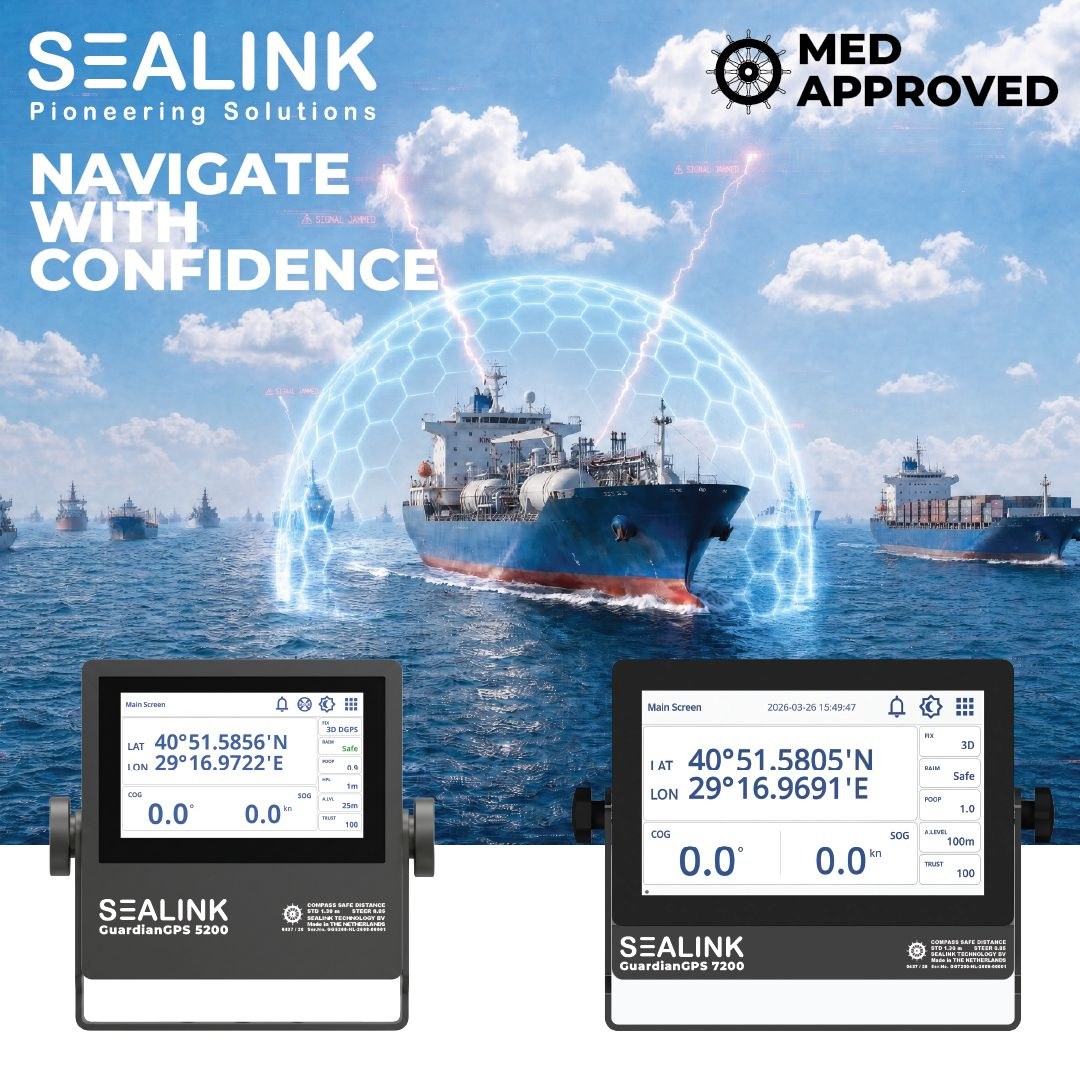
GuardianGPS 5200 & 7200 Enter Serial Production
SEALINK has moved GuardianGPS 5200 and 7200 into serial production, bringing multi-frequency GNSS, interference awareness and modern bridge integration into one navigation platform.


GuardianGPS has reached an important milestone: the 5200 and 7200 platforms have moved into serial production following their launch at Asia Pacific Maritime 2026 in Singapore.
The development started from a simple question: why should modern vessels still depend on navigation equipment built around the limitations of older single-frequency GPS technology?
A modern approach to marine GNSS
GuardianGPS was developed as a new-generation marine GNSS platform built around multi-frequency, multi-constellation reception. The system is designed to work with signals across GPS, Galileo, BeiDou, GLONASS, QZSS, NavIC and SBAS, giving operators a broader navigation data foundation than conventional single-frequency receivers.
The platform also brings interference awareness closer to the bridge. Live RF spectrum analysis is intended to help crews identify conditions associated with jamming and spoofing rather than treating satellite positioning as an unquestioned source of truth.
Two form factors, one platform
The GuardianGPS family is available in two configurations. The compact 5200 is designed for installations where space and integration flexibility matter, while the larger 7200 provides a full-station format with expanded connectivity for primary navigation applications.
Both models are built around the same core direction: resilient positioning, modern marine interfaces and a user experience suited to contemporary bridge operations.
From prototype to production
Moving into serial production marks the transition from product development to wider vessel deployment. For SEALINK, the objective is not simply to add another GPS receiver to the bridge, but to provide a more resilient navigation platform for an environment in which signal interference and cyber-related risks can no longer be treated as edge cases.